

CFA Piles
CFA (Continuous Flight Auger) piles are one of the most widely recognized and commonly used piling technologies.
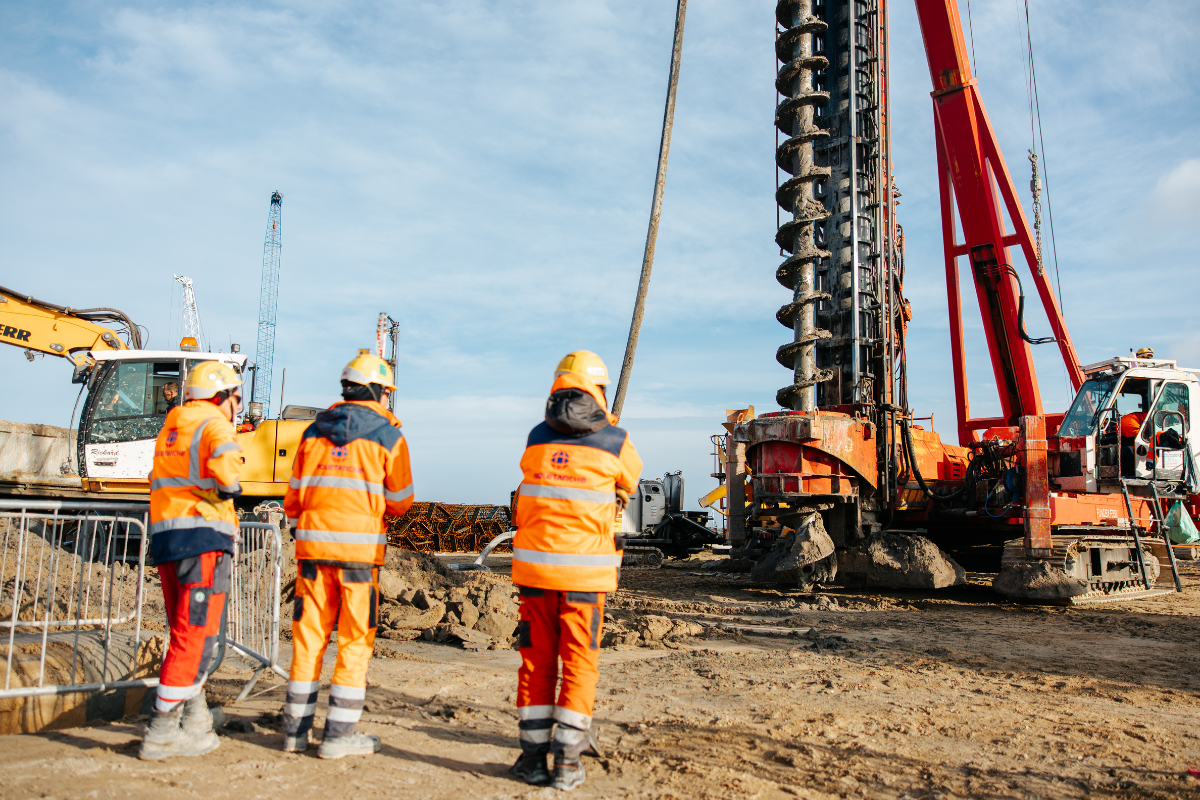
CFA piles are formed using a continuous flight auger mounted on a tubular core. This method allows for pile installation even in dense or stiff-plastic soil layers, enabling broad applicability and achieving significant pile lengths without the need for casing or bentonite slurry.
CFA technology description
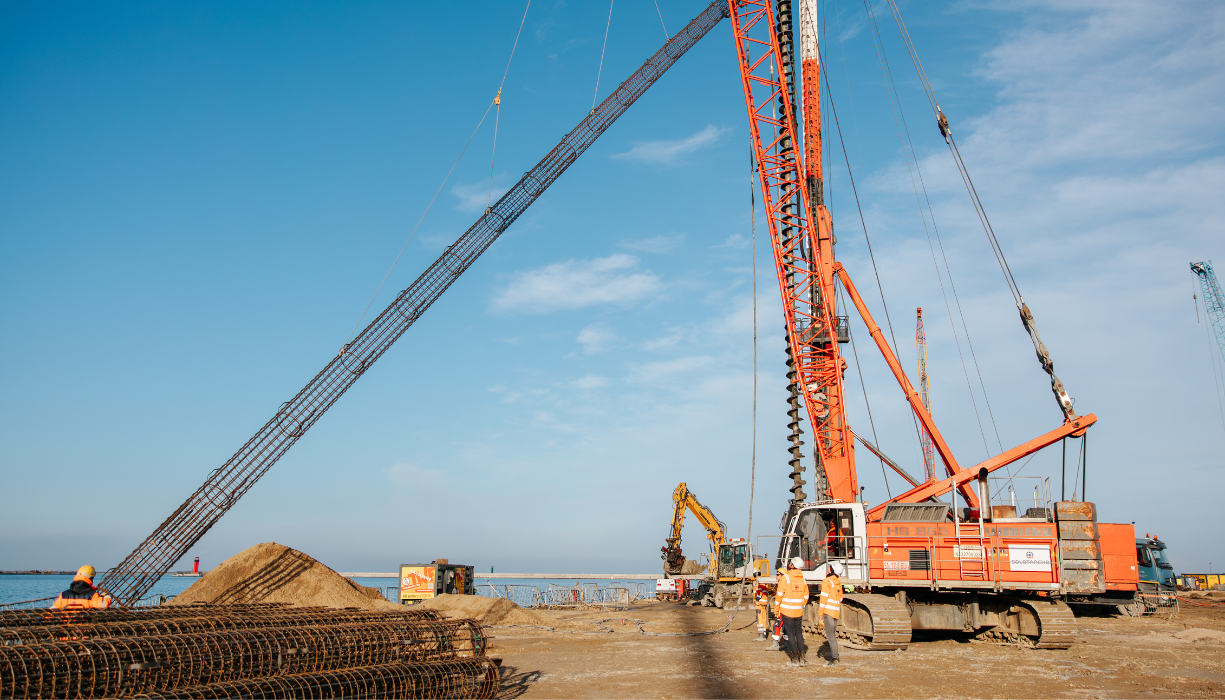
At the start of the process, the auger is drilled into the ground, displacing and loosening the soil. Once the design depth is reached, the auger is systematically withdrawn, and the resulting borehole is filled from the bottom with concrete pumped through the auger stem.
Bottom-up concrete placement under pressure stabilizes the soil at the pile tip and along the shaft, preventing collapse or sloughing of the borehole, and ensures effective interaction between the concrete element and the surrounding soil. After concreting, the pile is reinforced with a reinforcement cage or steel section placed into the fresh concrete.
Applications of CFA Piles
Due to their suitability for dense and stiff-plastic soils and the relatively large concrete cross-sections, CFA piles are used for:
• Vertical load-bearing applications in conventional deep foundation systems.
• Horizontal load transfer, including resistance to lateral forces.
• Retaining structures, when arranged as a pile wall.
• Slope stabilization and securing areas prone to landslides.
Available pile diameters: 400 mm, 600 mm, 800 mm, 1000 mm, 1200 mm.