

Jet Grouting
Jet Grouting is one of the deep soil mixing technologies using a cement-based binder.
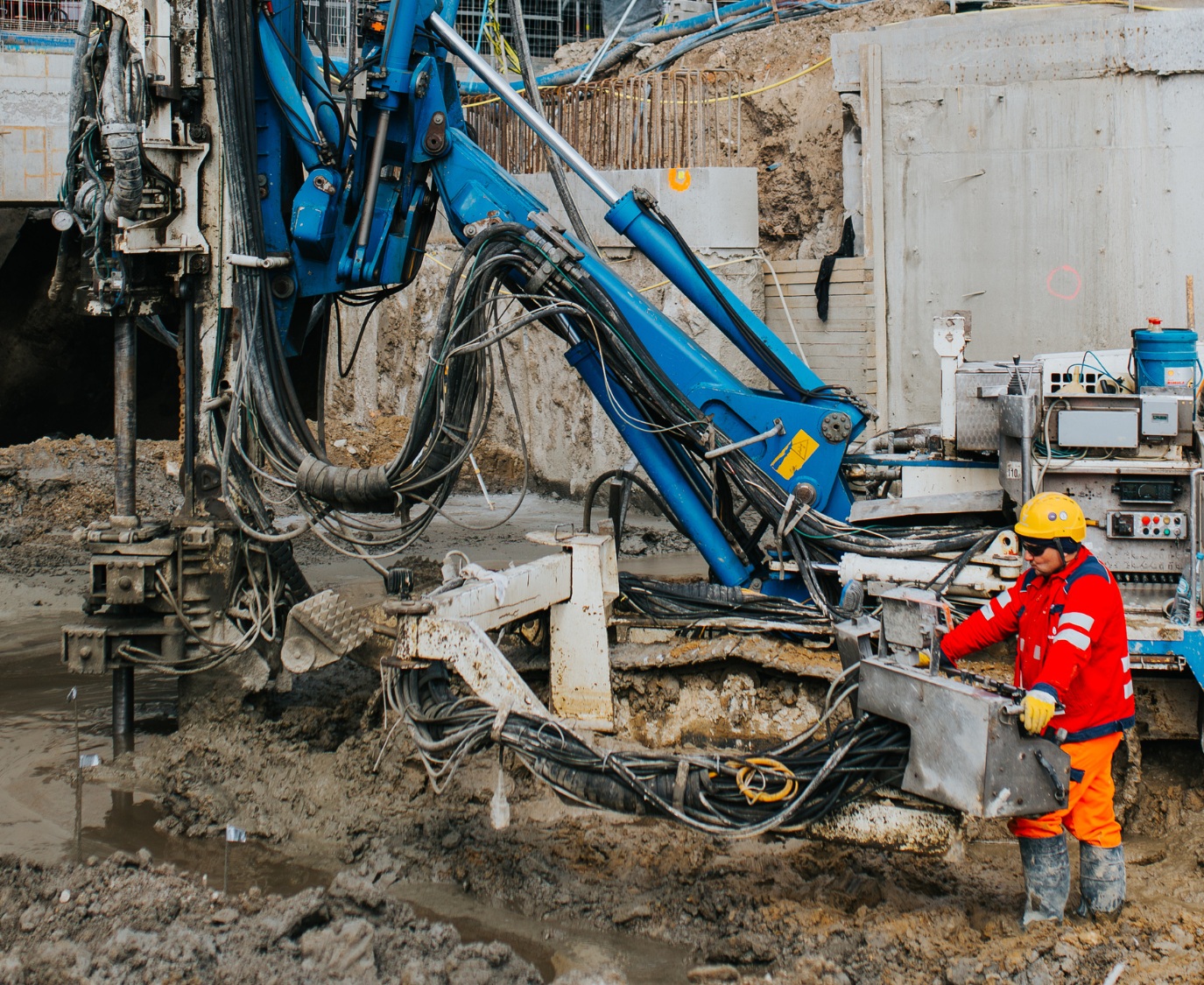
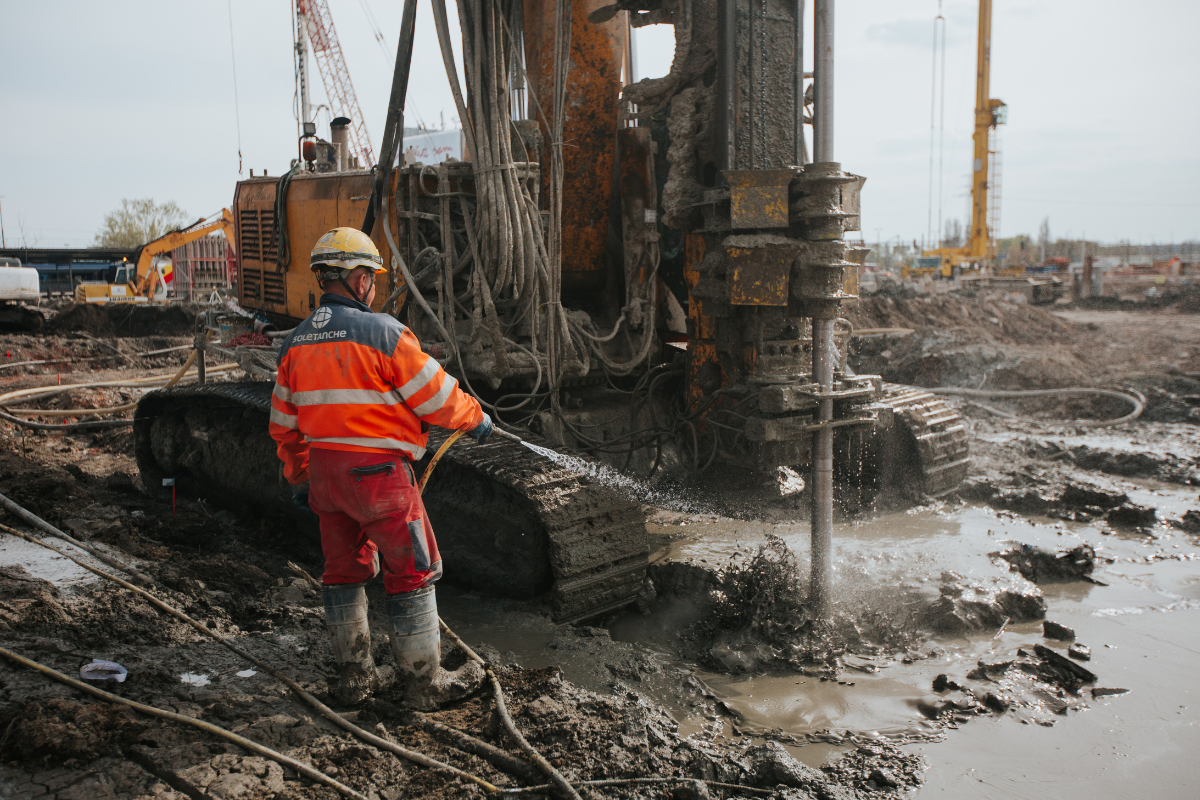
The process involves inserting a rotating drilling rod equipped with a jetting monitor into the ground, through which cement grout is injected at very high pressure (20–40 MPa). The high-energy grout jet disrupts the soil structure and mixes with soil particles. After hardening, a homogeneous material with strength parameters higher than the native subsoil layers is formed, known as soilcrete. The technology enables the construction of columns with diameters exceeding 1500 mm, as well as elements shaped as circular segments.
Advantages of Jet Grouting technology
Design flexibility – the column diameter can be adjusted by modifying jetting parameters such as injection pressure, lifting rate, and rotation speed.
Minimal space requirements – the process requires limited working space due to the small equipment footprint and reduced operating height.
Suitability for works near existing structures – columns can be installed in direct contact with reinforced concrete or masonry structures.
High execution efficiency – the technology allows the construction of large-diameter columns using relatively small boreholes.
Geometric precision – the ability to form partial column sections by directing the jet at a defined angle without full rod rotation, enabling more accurate shaping of the soil improvement zone.
Applications of Jet Grouting technology
Jet grouting can be applied in all granular soils or soft rock formations, mainly for soil improvement and reinforcement, and wherever specific waterproofing (sealing) requirements must be met.
Specialized applications include:
• Underpinning of buildings.
• Cut-off / seepage control walls for dams.
• Retaining walls for excavations.
• Tunnel face stabilization (jet grouting umbrella arch).
• Consolidation grouting curtains for quay walls and waterfront structures.