

Trenched Cut-off Walls (Excavated Barriers)
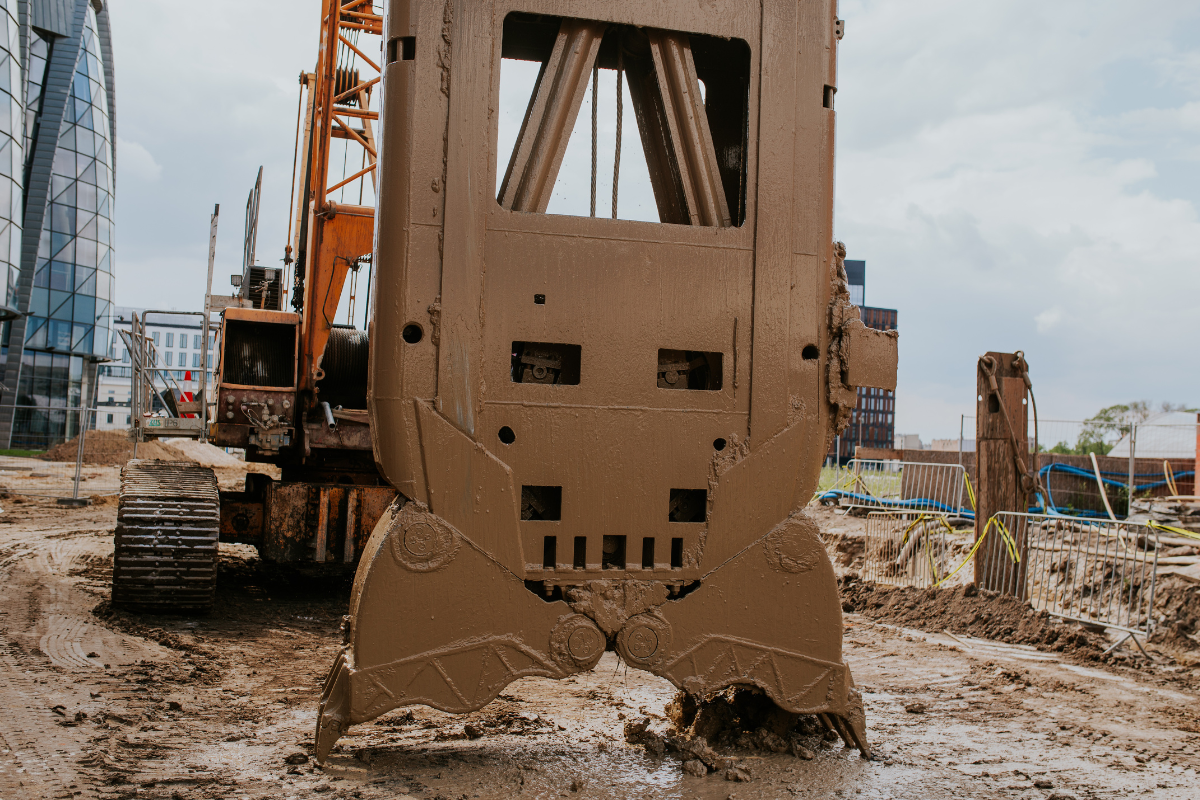
Excavated barriers are constructed using a narrow-trench excavation method, where soil is removed with a grab (hydraulic or mechanical).
This method is vibration-free and impact-free, minimizing disturbance to surrounding soils and nearby structures. During excavation, the depth of the barrier can be continuously verified against the design requirements, ensuring that the excavation reaches the intended impermeable layer by comparing the excavated material with geological documentation. This technique allows the construction of barriers to significant depths, often exceeding 30 meters.
Technology description
Excavated barriers are built in narrow trenches using a grab to remove soil.
As excavation progresses, each section of the barrier is filled with a bentonite-cement slurry, which stabilizes the trench walls and prevents collapse.
Once the design depth is reached, the slurry is left to set, providing waterproofing and sealing properties. Excavation proceeds alternately in adjacent sections, ultimately creating a continuous barrier that effectively limits groundwater flow.
Advantages of Excavated Barriers
• Reduces groundwater infiltration – ensures stable excavation conditions, limits soil erosion, and reduces the need for intensive dewatering.
• Protects structures from water – particularly useful for metro stations, deep foundations, and tanks. Barriers separate the construction from groundwater, enhancing operational safety and reducing the risk of water ingress or undermining.