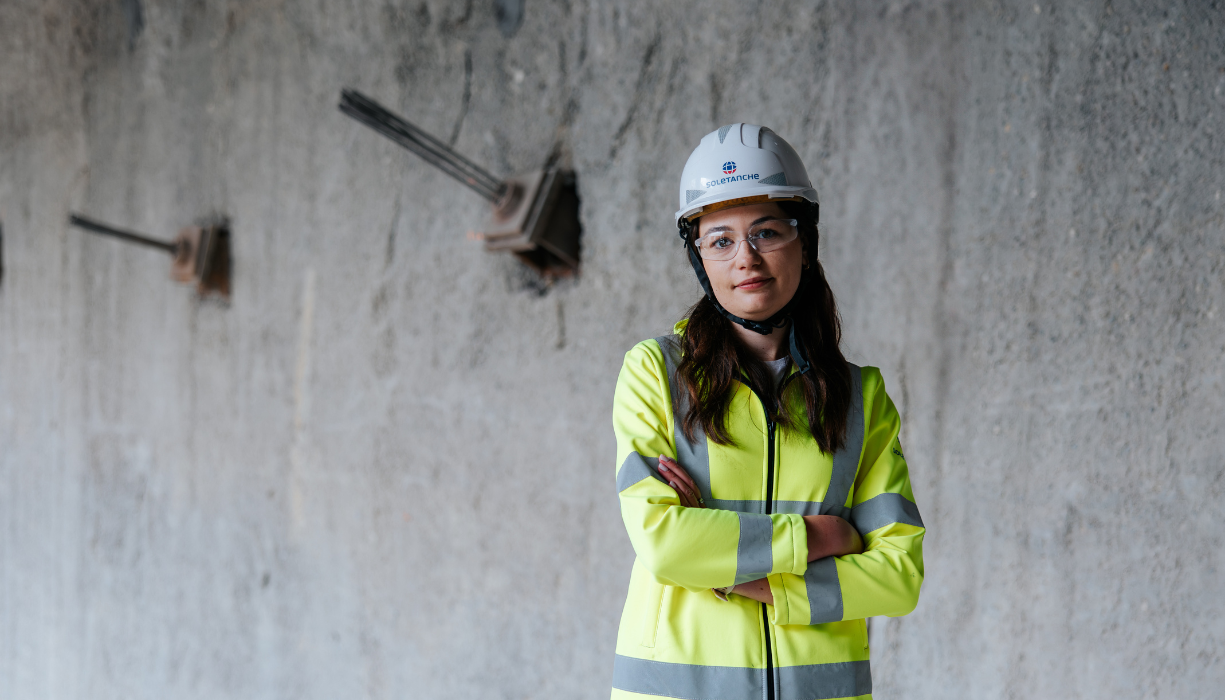
Ground anchors
Ground anchors are a widely used and proven solution for ensuring the stability of deep excavation support systems.
They transfer horizontal forces from excavation retaining structures (diaphragm walls, Berlin-type walls, or pile walls) into the soil located beyond the potential failure wedge. The load-bearing part of the anchor is the bond length (anchor bulb), formed by grouting the anchor “root” through grout tubes installed together with the reinforcement (tendons or bars) after drilling the borehole. The anchor transfers load from the structure via an anchor head and a steel waler/clamping system.
Ground anchor installation process
Drilling the borehole using casing pipes or a continuous flight auger to the designed depth and inclination. These parameters are selected so that the anchor bulb is located in competent bearing strata, outside the failure wedge.
Filling the borehole with cement grout and installing the reinforcement element together with grout tubes, connecting the anchored structure with the anchor bulb.
Forming the anchor bulb by pressure grouting to ensure full load capacity and long-term durability of the bond.

Applications of ground anchors
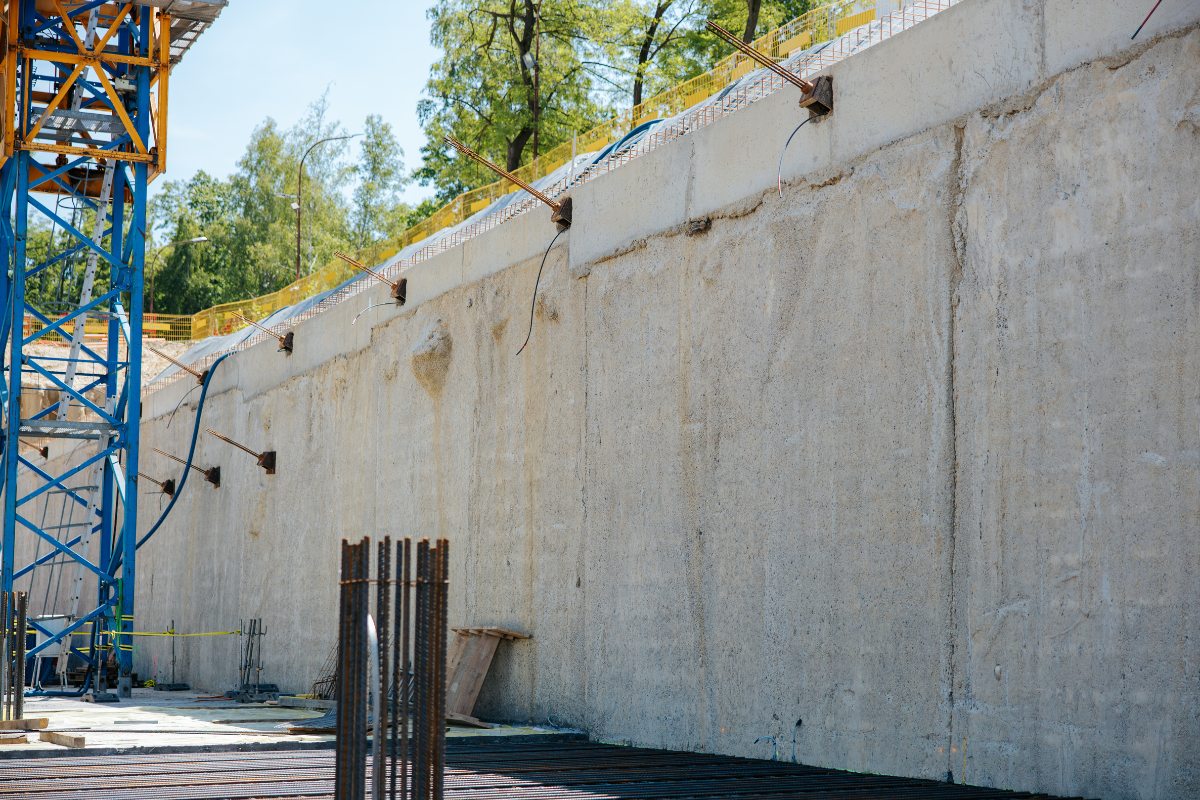
Temporary and permanent retaining structures – diaphragm walls, sheet pile walls, retaining walls, underpinning curtains, Berlin-type walls.
Transfer of tensile loads – anchoring slabs below groundwater level, prestressing piles working in tension, anchoring slender structures, transferring loads for temporary installation cables (suspension bridges, etc.).
Anchoring and soil nailing – stabilization of slopes and landslides, tunnel consolidation, anchoring of pipeline thrust blocks.
Transfer of thrust loads to vaults, structural prestressing, and improving dam stability.
Advantages of ground anchors
Ground anchors stand out among other anchoring systems due to the presence of a free length, which allows for compensation of movements of the failure wedge acting on the excavation support system.
- Suitable for use in a wide range of ground conditions.
- Compatible with various small-diameter drilling techniques. .
- Allows stabilization of retaining structures using one or multiple levels of ground anchors.
- High service life (subject to regular monitoring).