

Deep Soil Mixing (DSM)
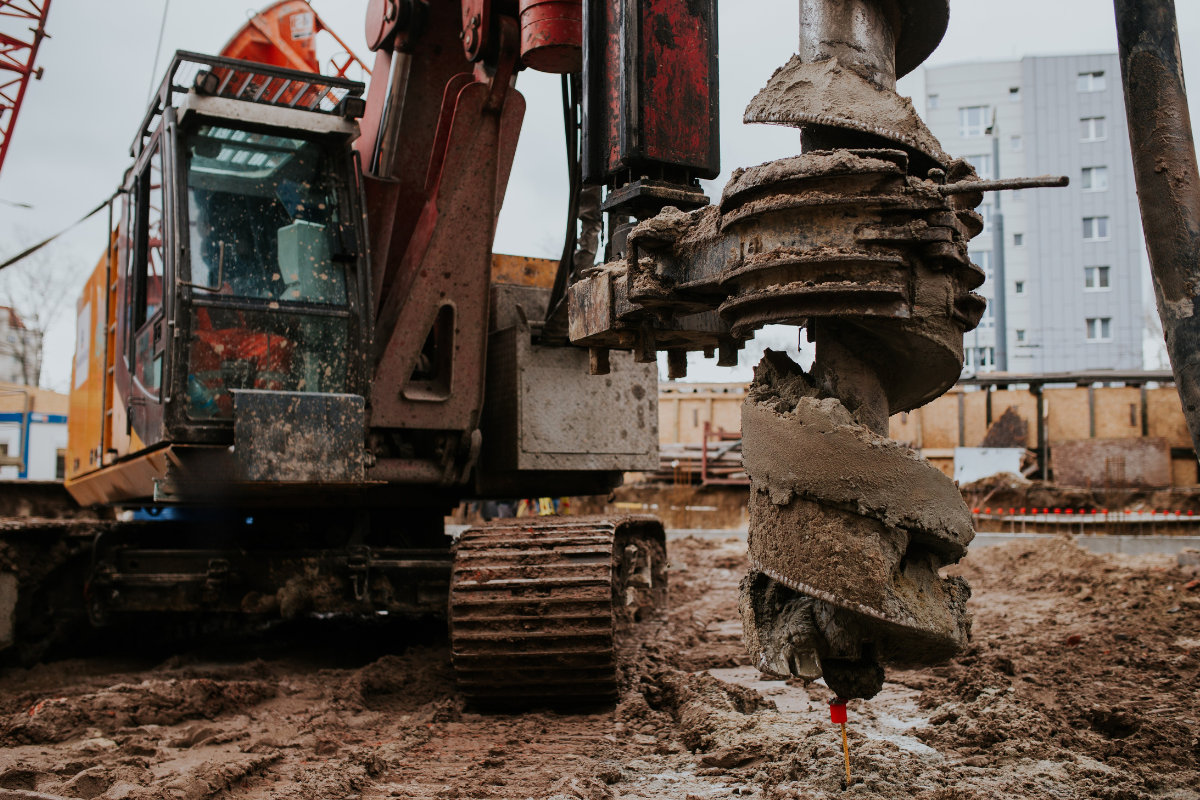
Deep Soil Mixing (DSM) technology involves mixing soil with a binder. As a result, a composite column is formed, consisting of soil particles blended with the binder, which increases watertightness and improves mechanical parameters.
Subsequent columns are drilled in such a way that they overlap previously executed ones. This creates a homogeneous cut-off wall with enhanced anti-seepage performance. During the production process, continuous control and recording of key parameters is carried out, such as the volume of injected binder mixture, the depth of mixer penetration, and the number of mixing cycles.
Applications of DSM technology
Deep Soil Mixing technology has a wide range of applications in construction projects, including:
Improvement of compressible soils subjected to distributed loads (e.g. industrial halls, storage yards, and linear structures such as railway and highway embankments).
Soil reinforcement to reduce the risk of liquefaction.
Construction of continuous cut-off walls in flood embankments and dikes, or low-permeability barriers to isolate contaminated areas.
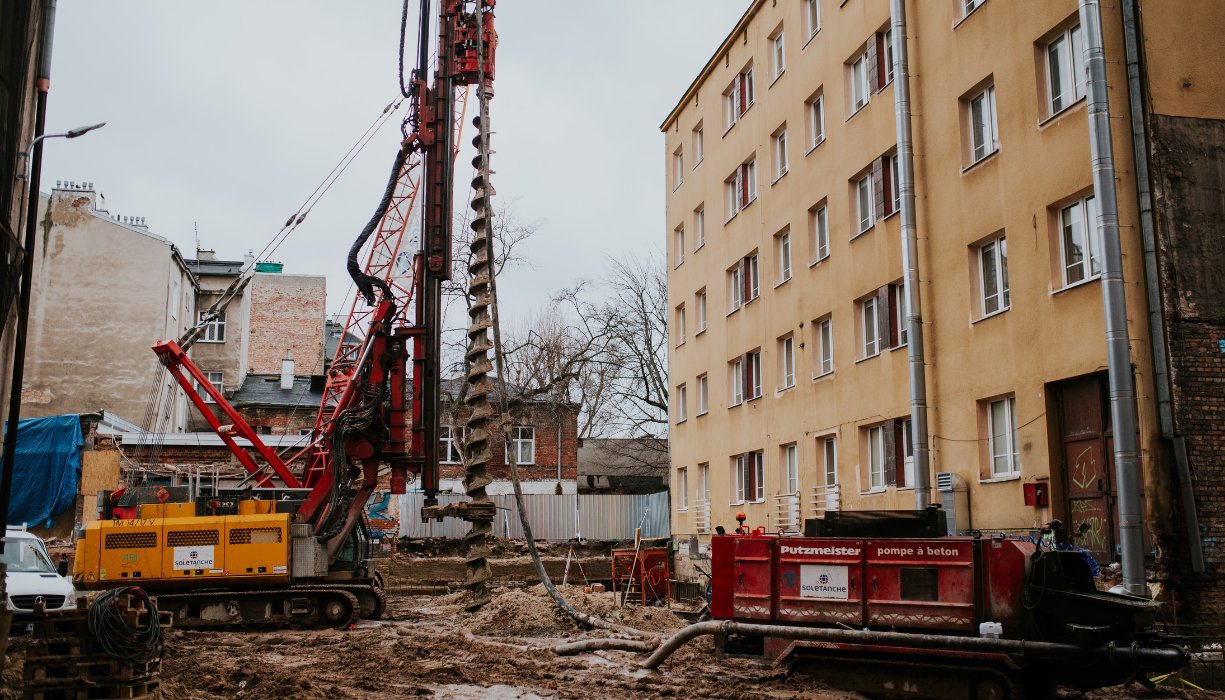
Construction of temporary or permanent retaining structures combined with vertical reinforcement elements (steel beams, pipes and/or prefabricated piles).
Stabilization of embankment and excavation slopes using transverse shear walls.
This technique is effective for all soil types. The soil-binder mixture is a semi-rigid material and provides improved mechanical and hydraulic properties compared to the original soil.
Benefits of Deep Soil Mixing
• Durable, semi-rigid material with defined mechanical and hydraulic properties.
• Generation of small volumes of spoil (in some cases suitable for reuse).
• Reduced carbon footprint of the entire process.
• Lower production and logistics costs.
• Time savings due to reduced preparatory works.