

Project Description
Project description
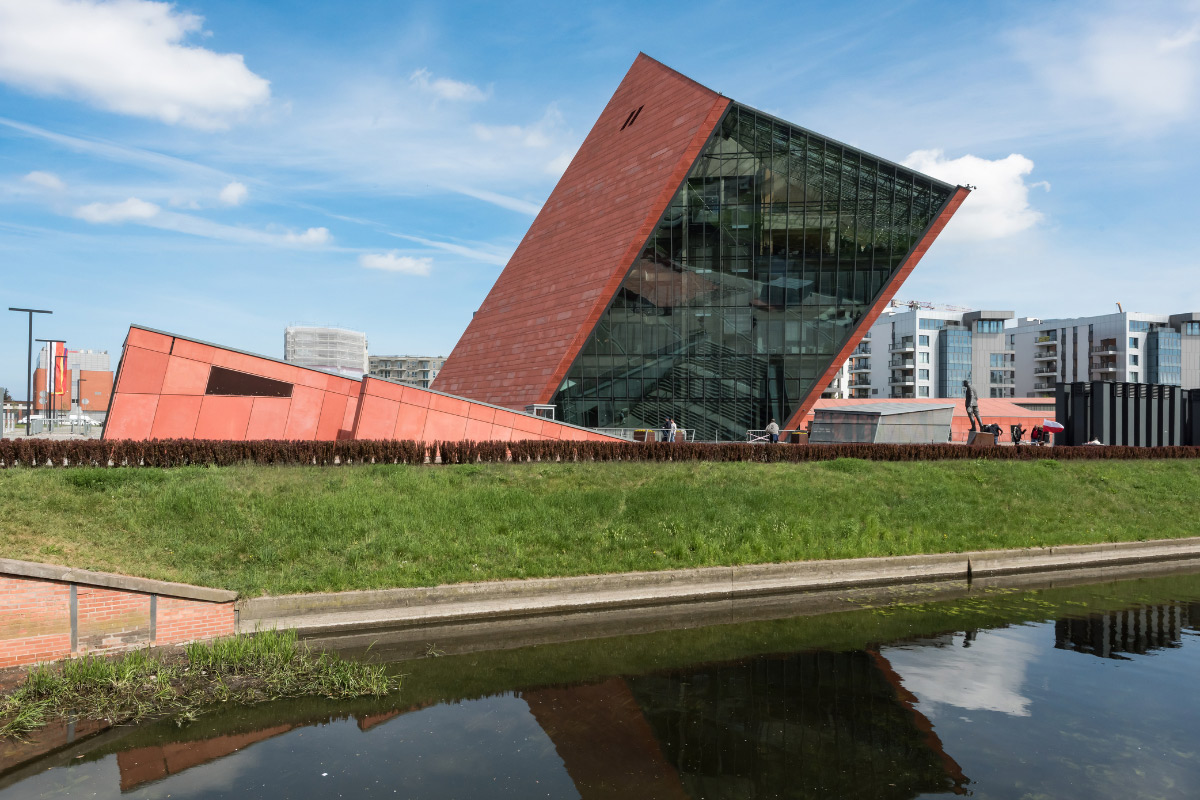
Construction of the Museum of the Second World War in Gdańsk began in September 2012 and was completed in January 2017. The total floor area of this eight-storey building is 58,000 m², with a usable area of 23,000 m². The architectural design was created by Studio Architektoniczne Kwadrat, and Hochtief Polska and Warbud were the general contractors. The museum is located near other buildings: Brabank II Apartments (114 m away), Rycerska 10 (147 m away), and Hotel Grand Cru (181 m away).
Scope of works – Soletanche Polska
In 2008, the decision was made to establish the Museum of the Second World War in Gdańsk. Soletanche Polska executed one of the most spectacular and challenging projects in the company’s history since 1996. The triangular-shaped museum building is bordered on one side by the Radunia River Canal and its tributary to the Motława River, on another side by Stara Stocznia Street, and by a pedestrian route along the canal leading to Sukiennicza Street. The project required an excavation up to 25 m deep, placing the main halls below ground level.
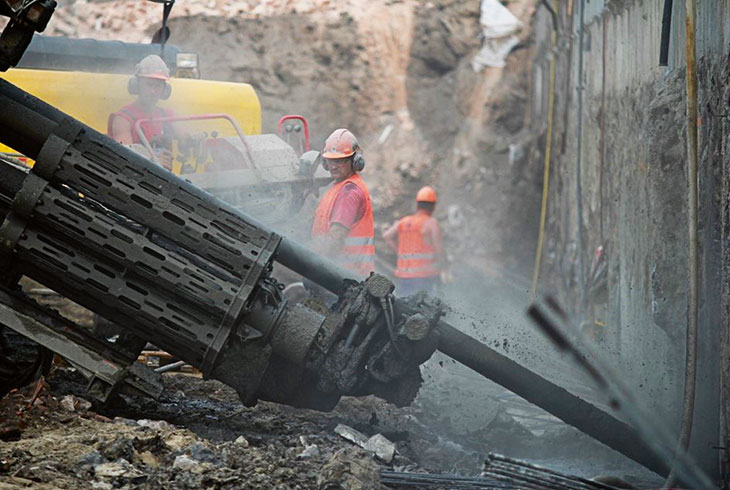
These conditions – high groundwater levels (the Motława River flows directly adjacent to the construction site) and a limited work area—made conventional excavation and further construction impossible.
Our task was to create a structure that would allow an excavation with vertical walls and a dry base, enabling safe continuation of work without the risk of flooding from the Motława. It should be noted that soil layers near rivers are saturated with groundwater, so any excavation without proper protection would result in failures or catastrophic collapses.
Project location:
Gdańsk, Poland
Investor:
Ministerstwo Kultury i Dziedzictwa Narodowego
General Contractor:
Hochtief Polska, Warbud
Total building area:
58 000 m²
Volume:
259 035,00 m3
Architectural height:
25 m
Number of above-ground floors:
8
Number of underground floors:
6
Our experience, both in design and execution, allowed us to develop a plan for securing the walls and dewatering the excavation base. We had previously completed numerous projects using diaphragm walls as support for large-scale excavations, as well as anchoring watertight foundation slabs. However, the Museum of the Second World War project was so complex, with a significant portion carried out underwater, that we invited other specialized companies to collaborate, including those experienced in underwater concreting, micropile installation, and dredging and dewatering.
In August 2012, we began work with the goal of constructing a watertight box over 20 m deep and covering an area of more than 14,000 m².
First, we constructed the excavation enclosure using CWS diaphragm wall technology, with a perimeter of over 500 m and an area exceeding 12,000 m². The diaphragm wall retained groundwater outside the excavation, and anchoring it with over 310 ground anchors ensured stability after soil removal.
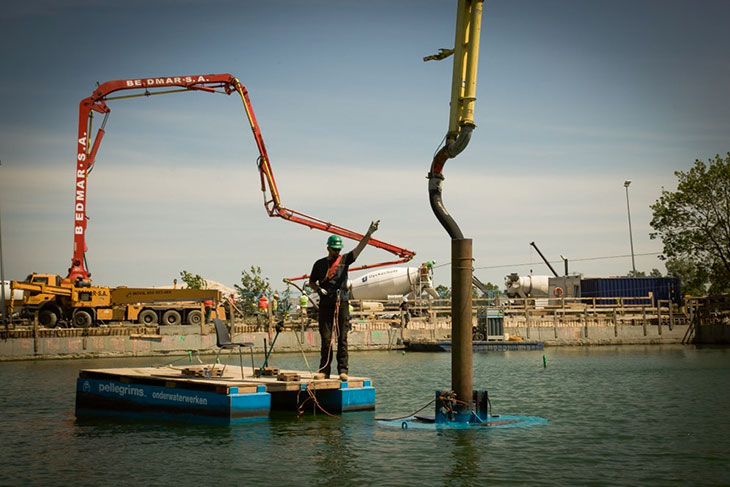
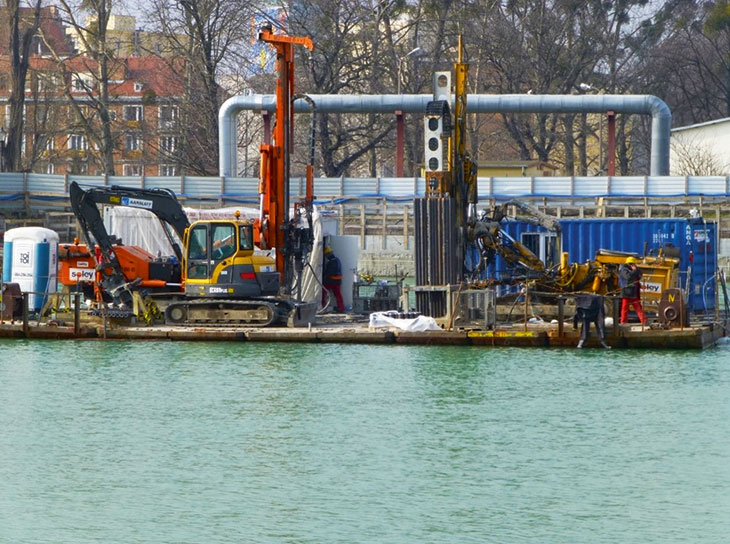
This secured the excavation against water inflow from the sides. The second phase involved creating a watertight base. For this, we carried out an underwater excavation and, using floating platforms, installed over 900 micropiles, whose positions in the slab were supervised by divers. The micropiles were necessary to prevent hydrostatic pressure from displacing the base slab and to allow construction of the internal structure.
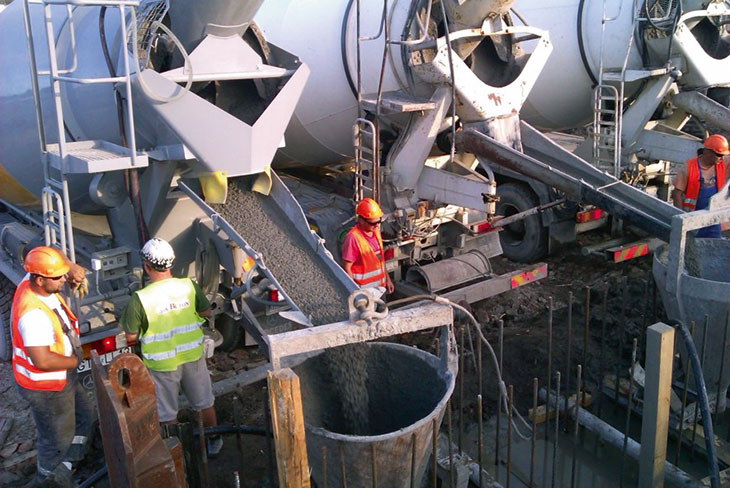
The next element ensuring a watertight base was the so-called underwater concrete plug—25,000 m³ of concrete poured over 20 m below water in a continuous process, 7 days a week, 24 hours a day. Placed between the micropiles and connected to the diaphragm wall, this plug completed the watertight box structure, allowing water to be pumped out of the excavation and enabling construction work to proceed safely.
Soletanche Polska’s solution for the Museum of the Second World War was a key element of this modern project, both culturally and engineering-wise. Leveraging our experience in the Polish market, we overcame complex challenges, achieving success and paving the way for future ambitious projects in Poland.
Discover Soletanche Polska’s offer
Explore the comprehensive offer of Soletanche Polska: markets, services, and foundation technologies for construction, infrastructure, industry, and environmental protection. It includes the full range of competencies required to deliver demanding geotechnical and foundation projects. Our approach enables flexible adjustment of the scope of works to the scale, nature, and specific conditions of each investment.
Related technologies
Diaphragm Wall
Diaphragm Wall
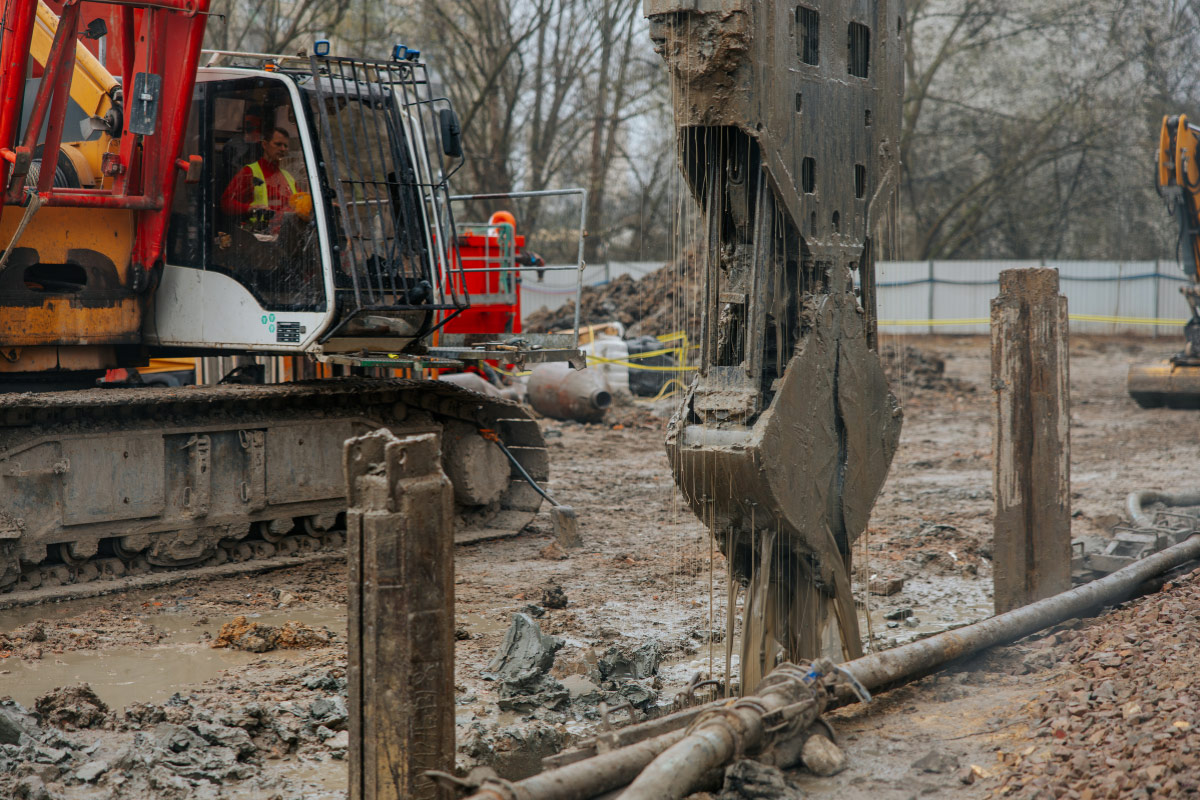
Diaphragm walls are reinforced concrete structures built in the ground, used as vertical supports for deep excavations.
Micropiles
Micropiles
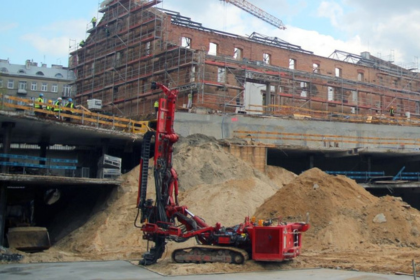
Micropiles are piles up to 300 mm in diameter, used to transfer structural loads through skin friction in the ground.
Ground anchors
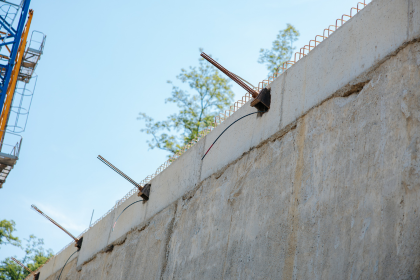
Widely used method to ensure stability of deep excavation walls under various soil conditions.
Related projects
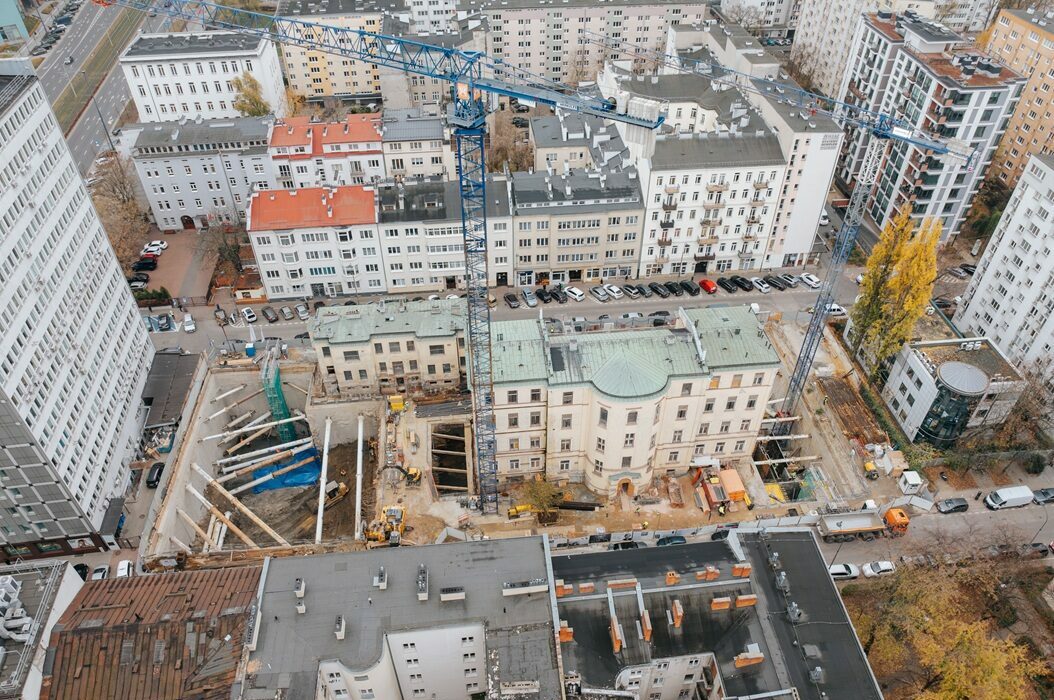
Warsaw West Railway Station, Warsaw
Museum of the Second World War, Gdańsk
Your project
in expert hands
Contact Soletanche Polska experts to receive comprehensive support – from consultancy to project execution.
Your project
in expert hands
Contact Soletanche Polska experts to receive comprehensive support – from consultancy to project execution.