26/06/25
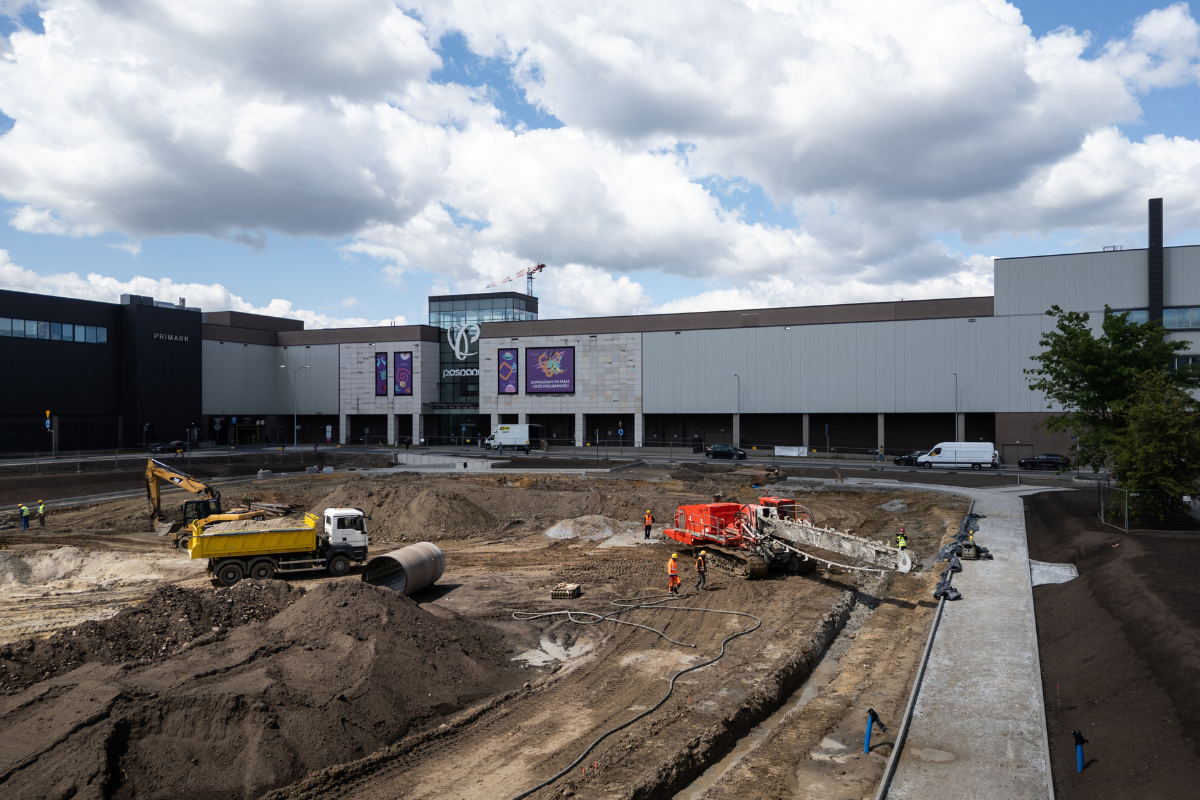
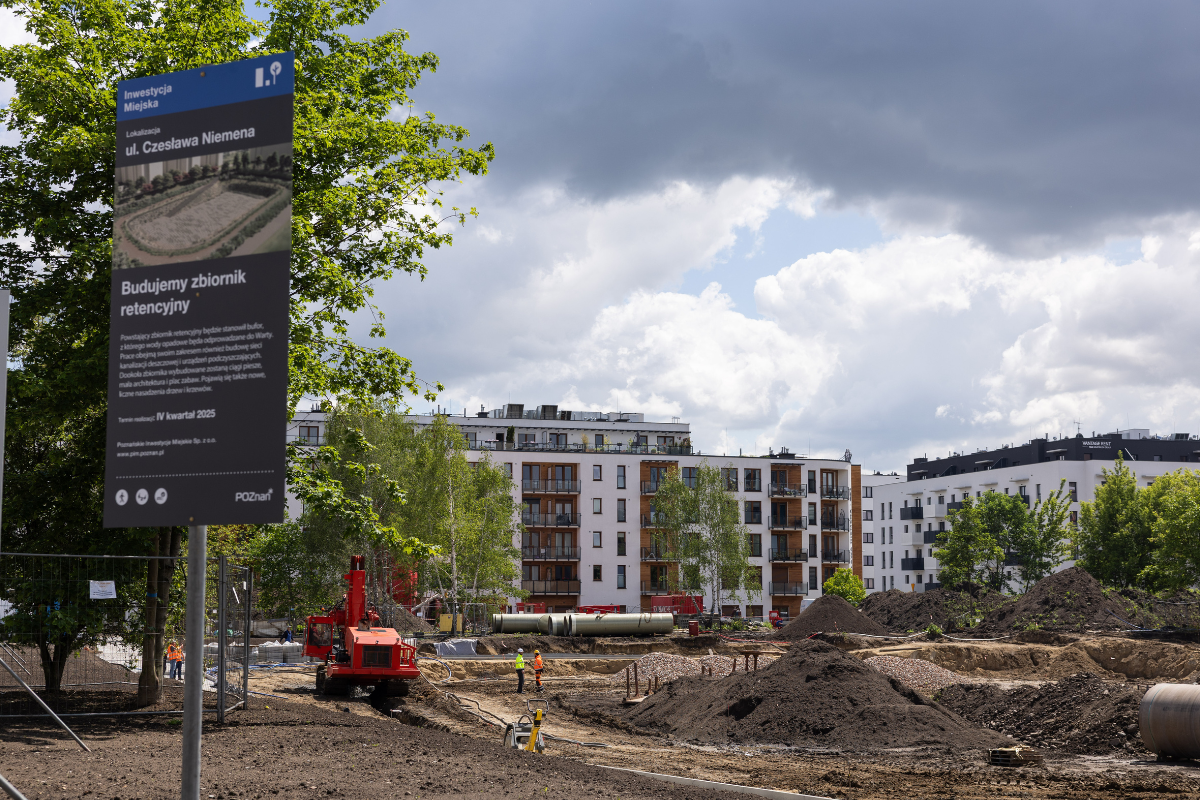
Construction of a retention reservoir is underway in the Łacina district of Poznań, aimed at strengthening the city’s protection against intense rainfall and the impacts of ongoing climate change. The project’s primary objectives are to relieve the lower section of the Berdychowo collector, reduce the risk of local flooding, and create a green, recreational space for the local community.
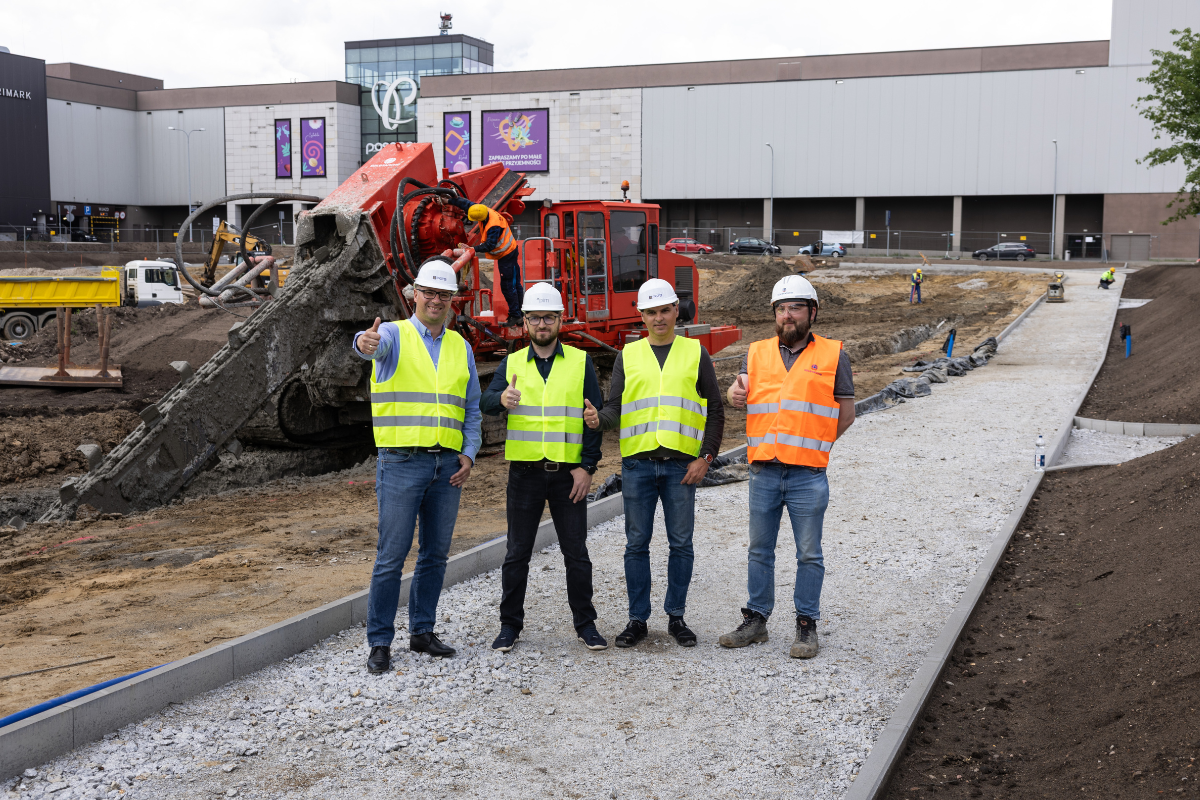
The project is implemented by AQUANET S.A., with support from Poznańskie Inwestycje Miejskie Sp. z o.o. as the project investor. General contracting is carried out by PGTB Sp. z o.o., engineering supervision by Sweco Polska Sp. z o.o., and Soletanche Polska Sp. z o.o. is responsible for the specialized geotechnical works.
A significant portion of the investment is co-financed by the European Union, secured by AQUANET under the “Stormwater Management in Poznań” program funded by European Funds.
Key objectives and project assumptions
The retention reservoir, covering an area of approximately 2,800 m² with a capacity of up to 1,900 m³, will temporarily store rainwater and meltwater, which will later be discharged into the Warta River through the city’s drainage system.
– This project represents an important step towards more efficient stormwater management in Poznań. The main function of the new retention reservoir in Łacina will be to relieve the lower section of the Berdychowo collector, particularly during periods of heavy rainfall. This is crucial for the city’s hydrological safety – says Tomasz Wilas, Senior Project Manager at Poznańskie Inwestycje Miejskie Sp. z o.o.
The reservoir’s location near a shopping center and residential buildings requires careful attention to safety, logistics, and minimizing inconvenience for local residents.
– The works are being carried out in a densely urbanized area, which necessitates precise planning of deliveries, noise and dust reduction, and maintaining maximum cleanliness on the construction site. We also ensure clear communication with the local community, providing updates on progress and any potential disruptions to minimize impact on daily life in the area – adds Łukasz Agaś, Contract Director / Project Manager at PGTB Sp. z o.o..
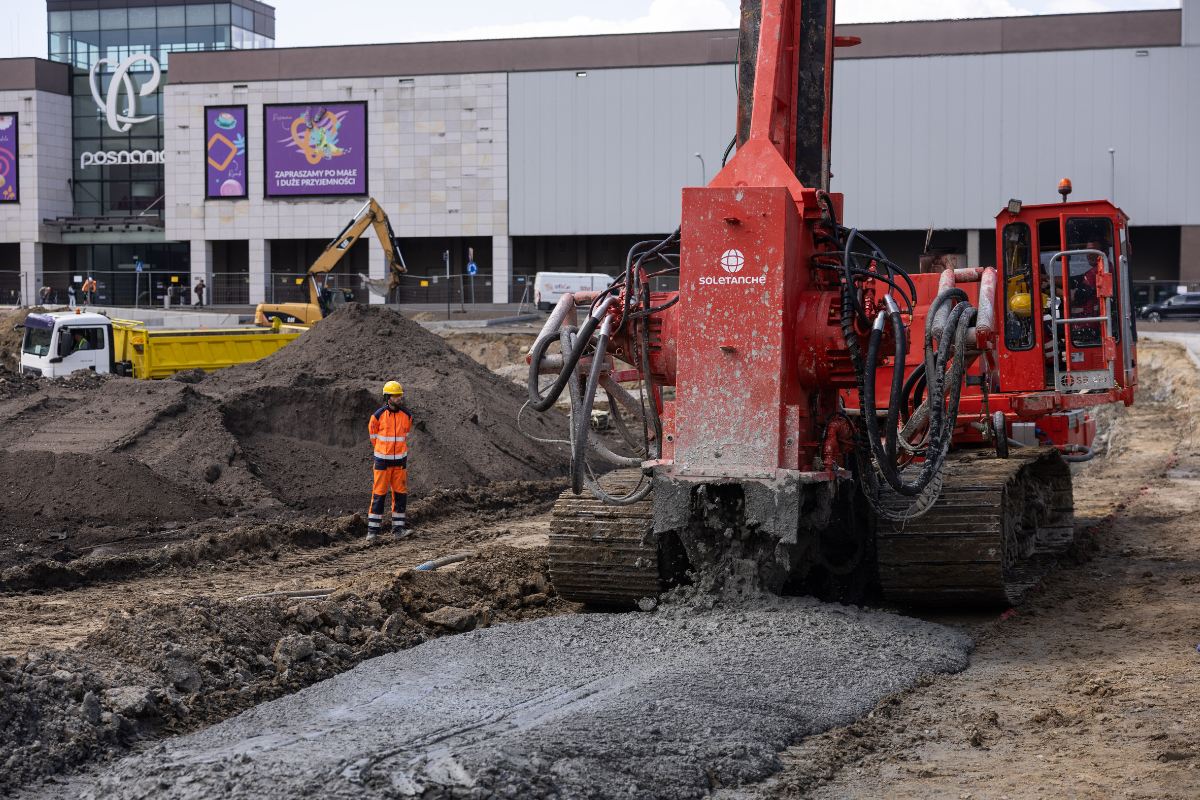
Trenchmix technology – efficiency and environmental care
The works are taking place in a challenging terrain, with geological surveys indicating the presence of clay at significant depths and a high groundwater table.
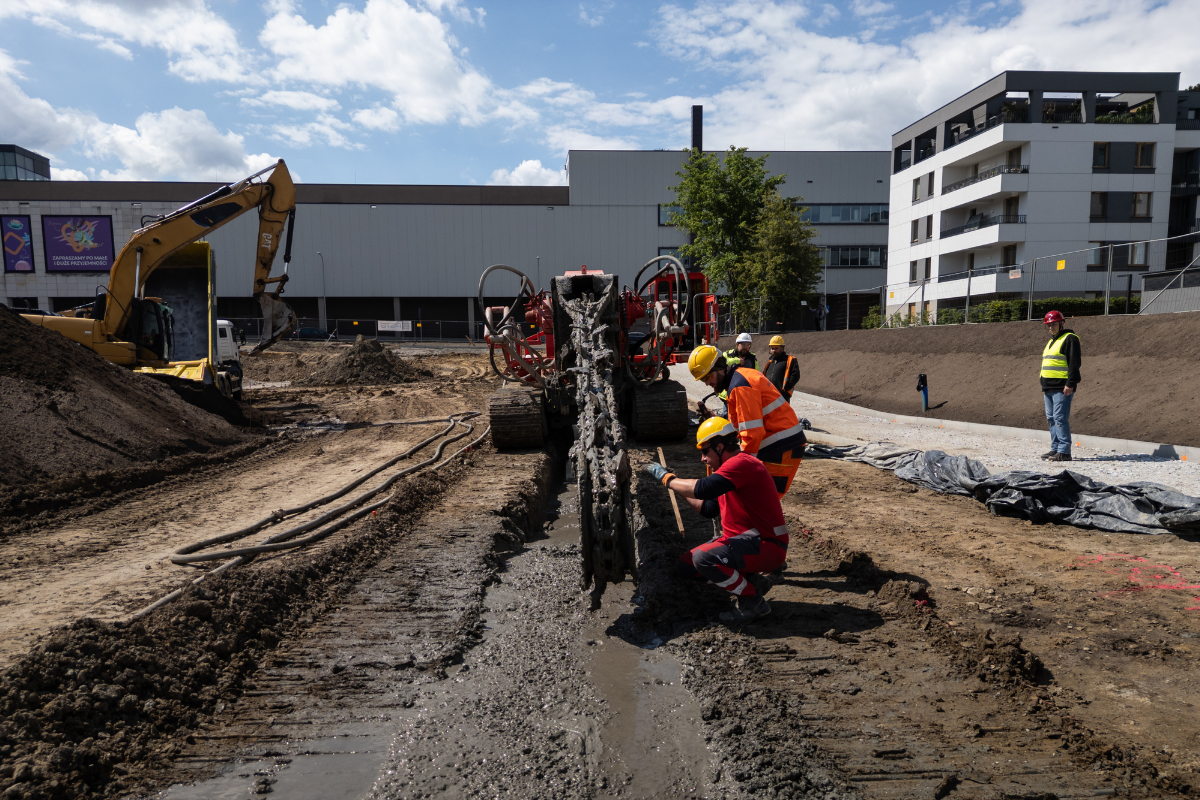
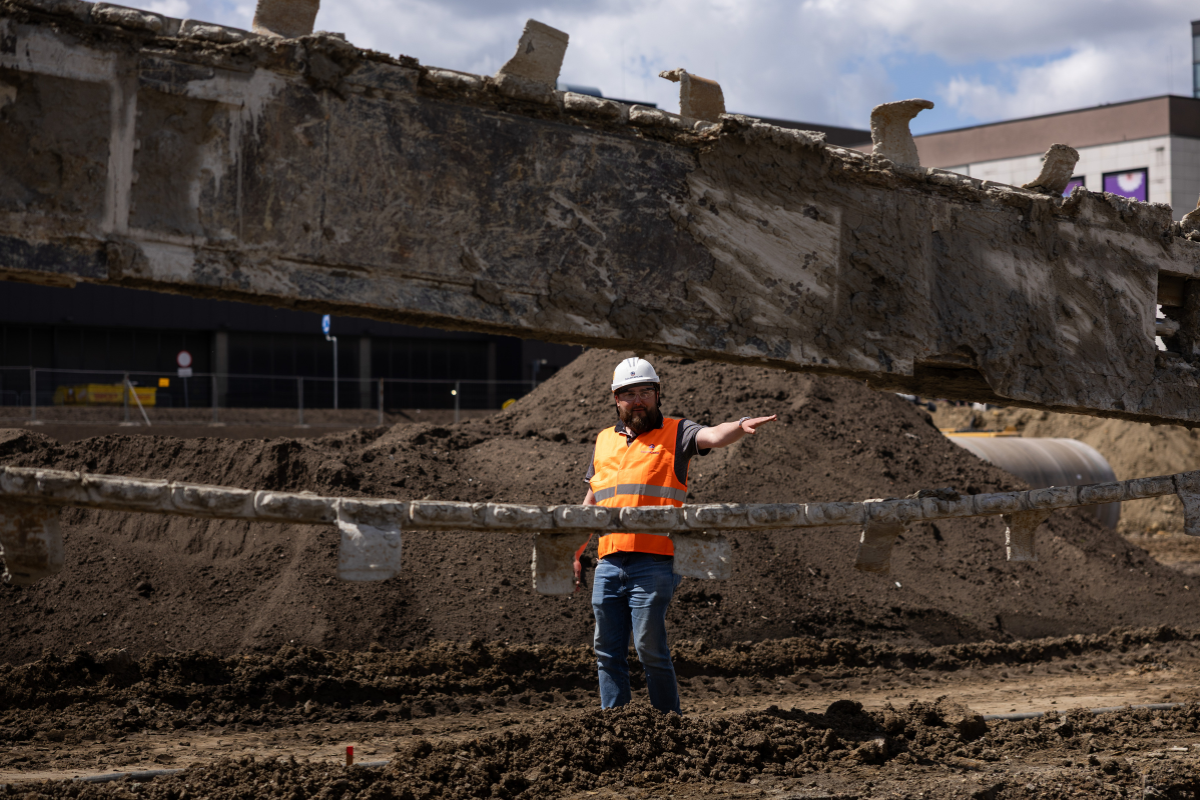
– To address these challenges, certain design solutions were revised, and advanced Trenchmix technology was applied. This method allows the creation of watertight and durable cutoff walls, ideal for conditions with high groundwater levels – explains Mirosław Koczorowski, Contract Engineer at Sweco Poland Sp. z o.o. Soletanche Poland is implementing a Trenchmix cutoff wall approximately 263 m in length and up to 10 m in depth. Trenchmix (TRMX) is gaining popularity due to its efficiency, versatility, and rapid installation. The method involves in-situ soil mixing, combining soil with a binder to create a uniform, low-permeability barrier.
The technology offers several environmental advantages, making it an attractive option for sustainable construction.
– First and foremost, it minimizes waste. The process of mixing soil with the binder is carried out on-site, reducing the need to transport materials and minimizing the volume of excavated soil,” says Paweł Bułak, Project Manager at Soletanche Polska Sp. z o.o. He adds: – Another key aspect is the reduction of CO₂ emissions. Compared to traditional foundation methods, Trenchmix can lower carbon dioxide emissions by efficiently replacing part of the cement with additives such as fly ash. Fly ash, a byproduct of coal combustion, can substitute a portion of the cement in the mix. This reduces the amount of cement required, thereby lowering CO₂ emissions. It also allows for the effective use of industrial waste that would otherwise end up in landfills.
An additional advantage of Trenchmix technology is its high production rate. Using this method, it is possible to construct up to 700 m² of barrier per day, significantly accelerating the construction process. This not only saves time but also reduces costs associated with the building works.
Green, community-friendly recreational areas
It is worth emphasizing that the project has not only an infrastructural dimension but also social and environmental significance.
– Upon completion of the works, the area surrounding the reservoir will be developed into a green, accessible recreational space. Rainwater collected in the reservoir will be used, among other things, for irrigation, which aligns perfectly with the principles of sustainable development. Additionally, a new street – Olgi Sipowicz-Kory – will be constructed, improving the traffic layout in this part of the city – says Tomasz Wilas, Senior Project Manager at Poznańskie Inwestycje Miejskie Sp. z o.o.
Soletanche’s specialized expertise in water-engineering projects
Soletanche Polska is a company with extensive experience in implementing hydrotechnical and flood protection projects across Poland. Its expertise is confirmed by numerous successfully completed projects, such as the reconstruction of flood embankments along the Wisłoka River in Chrząstów near Mielec and along the Vistula River in the Dragacz municipality near Grudziądz. Other notable projects include the construction of a retention reservoir in Kluczbork, modernization of embankments in Maciejowice, and flood protection works in Wrocław. The company was also responsible for the emergency sealing of the “Metalchem” embankment in Opole, repairs to the embankment in Borusowa, and reconstruction of the Vistula and Stary Brzeń embankments in Ostrówek near Mielec.